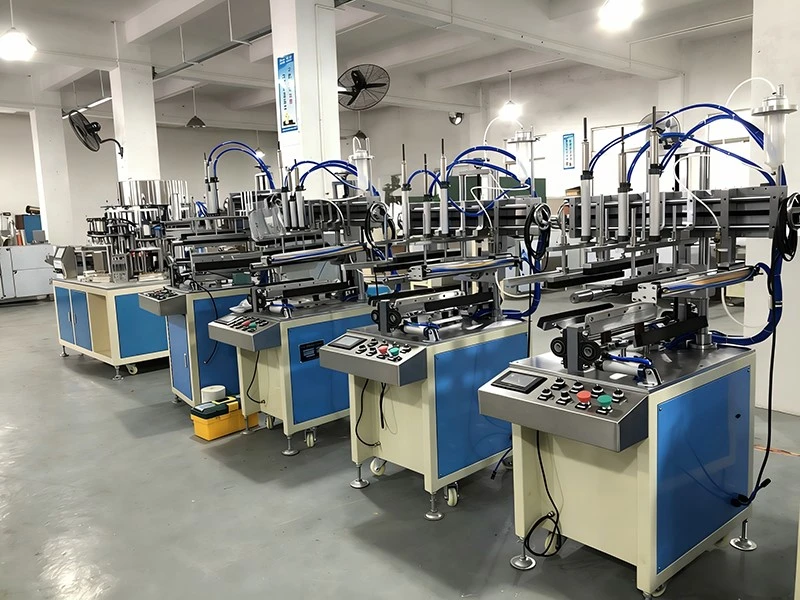
The plastic box folding machine is a core piece of equipment in plastic box packaging production. While structural designs vary by model, they all center on three key requirements: stable conveying, precise folding, and mark-free bonding.
Main Frame Structure
The equipment typically utilizes a high-strength steel or stainless steel frame as its main structure. This robust, deformation-resistant design ensures stability during prolonged, continuous operation. Some models feature thickened and reinforced critical load-bearing areas to accommodate high-intensity production environments.
Conveying and Folding Systems
Equipped with high-quality imported conveyor belts, the system ensures smooth and balanced operation; the pressing process leaves no scratches on the box surface, thereby preserving the visual quality of the finished product.
The folding station employs a combination of upper and lower belts to execute precise 180-degree folds on the first and third crease lines. Certain models incorporate mechanical folding blades paired with fabric-covered polishing components to prevent surface scratching.
Intelligent Control System
The machine features a high-quality variable frequency drive (VFD) that supports stepless speed regulation, allowing for flexible speed adjustments based on production needs. It is equipped with photoelectric sensors and a PLC-based touchscreen operating system, enabling parameter presetting and real-time production monitoring, as well as automatic fault diagnosis and alarm functions. Some models integrate photoelectric counters to facilitate quantitative counting and production data tracking.