

The surface roughness of rollers in rolling machinery is a critical factor that significantly affects the quality and characteristics of rolled products. As a supplier of the Three - station Cylindrical Edge Rolling Machine, I have witnessed firsthand the influence of roller surface roughness on the final output. In this blog post, I will explore this topic in detail, highlighting how different levels of roller surface roughness can impact the rolled products and why it matters in the manufacturing process.
1. Understanding Roller Surface Roughness
Roller surface roughness refers to the microscopic irregularities on the surface of the rollers used in rolling machines. These irregularities can be measured in terms of height, spacing, and shape. The roughness is typically expressed using parameters such as Ra (arithmetical mean deviation of the assessed profile), Rz (ten - point height of the irregularities), etc.
There are various ways to create different surface roughness levels on rollers. Machining processes like grinding, honing, and polishing can be used to achieve smooth surfaces, while methods such as shot blasting or chemical etching can produce rougher surfaces. The choice of surface roughness for rollers depends on the specific requirements of the rolling process and the type of product being rolled.
2. Influence on Surface Quality of Rolled Products
2.1 Surface Finish
One of the most obvious impacts of roller surface roughness is on the surface finish of the rolled products. A smooth roller surface (low surface roughness) generally results in a smoother finish on the rolled material. When the roller has a fine surface texture, it transfers less of its own irregularities to the product, leaving the product's surface with fewer scratches and a more uniform appearance.
For example, in the production of high - end packaging materials using our Three - station Cylindrical Edge Rolling Machine, a smooth surface finish is highly desirable. Products with a smooth surface not only look more aesthetically pleasing but also have better tactile properties. They are less likely to catch on other objects and are more suitable for applications where a clean and professional look is required.
On the other hand, a rougher roller surface can impart a textured finish to the rolled products. This can be intentional in some cases, such as when producing materials with a non - slip surface or a decorative pattern. For instance, in the manufacturing of certain types of flooring or packaging materials with a grip - enhancing feature, a rougher roller surface can be used to create the desired texture.
2.2 Surface Defects
Roller surface roughness can also lead to the formation of surface defects on the rolled products. A very rough roller surface may cause indentations, scratches, or burrs on the product. These defects can weaken the product's structure, reduce its corrosion resistance, and affect its overall functionality.
For example, in the rolling of thin metal sheets, a rough roller surface can cause micro - cracks on the sheet surface. These micro - cracks can act as stress concentrators, leading to premature failure of the product under stress. In addition, surface defects can also affect the performance of coatings applied to the rolled products. A rough surface with defects may prevent the coating from adhering properly, resulting in poor coating quality and reduced protection.
3. Influence on Mechanical Properties of Rolled Products
3.1 Hardness and Strength
The roller surface roughness can have an impact on the hardness and strength of the rolled products. During the rolling process, the interaction between the roller and the material causes deformation. A rough roller surface can induce more severe local deformation in the material compared to a smooth surface.
This increased local deformation can lead to work - hardening of the material. Work - hardening is a phenomenon where the material becomes harder and stronger as a result of plastic deformation. In some cases, this can be beneficial, as it can improve the mechanical properties of the rolled product. For example, in the production of high - strength steel bars, a certain level of work - hardening can be achieved by using rollers with an appropriate surface roughness.
However, excessive work - hardening due to a very rough roller surface can also make the material brittle. Brittle materials are more prone to cracking and failure, especially under impact or dynamic loading conditions. Therefore, it is crucial to control the roller surface roughness to achieve the desired balance between hardness, strength, and ductility of the rolled products.
3.2 Residual Stress
Roller surface roughness can also affect the residual stress distribution in the rolled products. Residual stress is the stress that remains in a material after the external loading has been removed. A rough roller surface can cause non - uniform deformation of the material, leading to uneven residual stress distribution.
High levels of residual stress can cause warping, distortion, and dimensional instability of the rolled products. For example, in the production of precision components, such as gears or shafts, residual stress can affect their accuracy and performance. Therefore, minimizing the influence of roller surface roughness on residual stress is essential for ensuring the quality and reliability of the rolled products.
4. Influence on Friction and Wear
4.1 Friction
The surface roughness of the rollers plays a significant role in determining the friction coefficient between the rollers and the rolled material. A rougher roller surface generally results in higher friction. Higher friction can have both positive and negative effects.
On the positive side, increased friction can improve the grip between the roller and the material, which is beneficial for processes such as traction - based rolling. For example, in the rolling of long - length metal strips, sufficient friction is required to ensure that the strip moves smoothly through the rolling machine without slipping.
However, excessive friction due to a very rough roller surface can also cause problems. It can increase the power consumption of the rolling machine, as more energy is required to overcome the frictional force. In addition, high friction can lead to overheating of the rollers and the rolled material, which can cause thermal damage and affect the quality of the product.
4.2 Wear
The roller surface roughness also affects the wear behavior of both the rollers and the rolled material. A rougher roller surface can cause more wear on the material being rolled. The sharp asperities on a rough roller surface can abrade the material, leading to material loss and surface deterioration.
At the same time, the rougher surface of the rollers themselves is also more prone to wear. The contact between the rough roller surface and the material can cause the removal of the surface material of the rollers, reducing their service life. This means that rollers with a higher surface roughness may need to be replaced more frequently, increasing the production cost.
5. The Role of Our Three - station Cylindrical Edge Rolling Machine
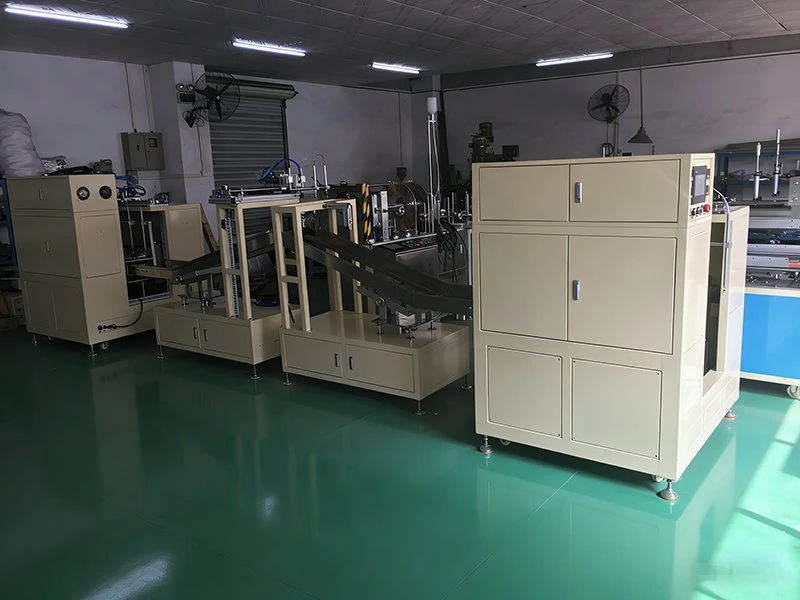
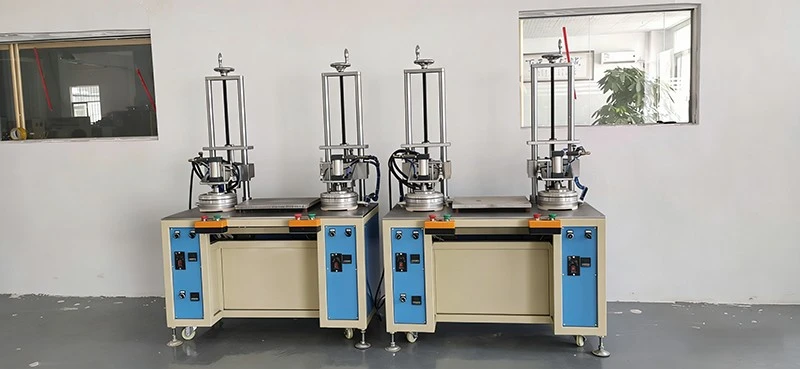
As a supplier of the Three - station Cylindrical Edge Rolling Machine, we understand the importance of roller surface roughness in the rolling process. Our machines are designed to provide precise control over the rolling parameters, including the roller surface roughness.
We offer a range of roller options with different surface roughness levels to meet the diverse needs of our customers. Whether you need a smooth surface finish for high - end products or a textured surface for specific applications, our machines can be customized accordingly. In addition, we also provide technical support and guidance to help our customers optimize the roller surface roughness for their specific products.
6. Other Related Machines in Our Product Line
In addition to the Three - station Cylindrical Edge Rolling Machine, we also offer other high - quality rolling machines. Our Four - station Cylindrical Edge Rolling Machine provides increased productivity and efficiency, suitable for large - scale production. The Two - station PVC Cylinder Curling Machine is specifically designed for PVC cylinder processing, with a simple and reliable structure. And our Automatic Roller Curling Machine offers automated operation, reducing labor costs and improving production accuracy.
7. Conclusion and Call to Action
In conclusion, the roller surface roughness has a profound influence on the rolled products in terms of surface quality, mechanical properties, friction, and wear. Choosing the appropriate roller surface roughness is crucial for achieving the desired product quality and production efficiency.
If you are looking for high - quality rolling machines and need professional advice on roller surface roughness and other related issues, we are here to help. Contact us today to discuss your specific requirements and see how our products can meet your needs in the manufacturing process. Our team of experts is ready to provide you with the best solutions.
References
- ASM Handbook, Volume 7: Powder Metallurgy, Metals Park, Ohio: ASM International, 1998.
- Callister, W. D. Materials Science and Engineering: An Introduction, 7th edition, Wiley, 2007.
- Kalpakjian, S., & Schmid, S. R. Manufacturing Engineering and Technology, 5th edition, Prentice Hall, 2008.